Does your forehead look taller when you lift your brows for photos or when you concentrate at a screen? That small, unconscious motion can visually add a centimeter or more to the upper third of the face. In practice, many patients come in asking about hairline lowering or fillers along the frontal bone, when the simplest fix is to retrain the frontalis with carefully placed Botox. Done well, neuromodulators can create a forehead shortening illusion, lift the eyes without pulling, and settle the features into cleaner proportions, all while keeping a natural range of expression.
What “forehead shortening illusion” really means
We are not moving the hairline. We are changing how the frontalis, corrugators, procerus, and lateral brow depressors interact, which changes how light sits on the upper third of the face and how much forehead skin is exposed in your neutral expression. When the frontalis is overactive, the eyebrows ride higher at rest, the hairline-to-brow distance looks longer, and horizontal forehead creases stack. By dialing down the frontalis just enough and reinforcing lateral brow support, we reduce that vertical span visually. The brow settles into a slightly lower, more stable position, and the upper lid platform reads more open, not heavy.
The illusion comes from three things: fewer horizontal lines to draw the eye upward, a steadier brow that does not hover, and a smoother transition from temple to brow tail. I often show patients side-by-side photos with their brows relaxed and brows lifted. It is common to see a 15 to 20 percent change in botox injections MI perceived forehead height just from muscle behavior.
Anatomy and the physics of expression
The frontalis is the only elevator of the brows. Everything else around it pulls down. When we talk about botox for overactive facial muscles in the upper face, we are almost always talking about an overachieving frontalis compensating for tight glabellar muscles, heavy lids, or a long-standing habit of surprise-face expression. Modulating those opposing forces is how we build the forehead shortening illusion without flattening your personality.
Corrugators bring the brows together. The procerus scrunches the bridge of the nose. The orbicularis oculi drags the lateral brow downward when you smile or squint. If we relax the glabella just enough, the frontalis no longer has to constantly lift to clear vision or to “correct” a frown habit. If we support the lateral brow with tiny doses, we can keep it from dropping, which prevents that hooded, tired looking face that makes people think Botox affects emotions rather than muscles. The key is dosage, depth, and the map.
Think of this as muscle overuse management. People with habit driven wrinkles from screens or bright light develop squint lines that recruit the forehead reflexively. Break that loop and you control dynamic wrinkle formation and improve facial harmony.
The mapping strategy that shortens the forehead
There is a persistent myth that less is always more in the forehead. Less can also be lopsided. Strategic placement is the difference between a polished appearance and an odd brow quirk. Here is a simplified description of a typical approach for the illusion, adjusted to face shape and brow position.
Start with the glabella. A small set of injections into the corrugators and procerus resets the default brow tension. This can be 8 to 16 units in total for many patients, sometimes more for men or heavy muscle dominance. The effect is not cosmetic alone. People who carry facial tightness here often report fewer headaches and a calmer resting face. This is botox for frown habit correction and botox for resting angry face in action.
Lightly treat the central frontalis. The middle third of the forehead is often the culprit for that uplifted, surprised look. Low to moderate units in the central bands reduce the tendency to over-lift, which shortens the visible forehead span. Placement should respect the hairline-to-brow ratio, which varies by gender and ethnicity. A common pitfall is treating too high, which does little for creases and risks a top-heavy brow.
Preserve or support the lateral brow. The lateral fibers of the frontalis are thin and variable. Over-treating them drops the brow tail and narrows the eye, the opposite of an eye opening appearance. Instead, I place tiny micro-doses under the tail to guide a subtle brow shaping effect, then balance with very conservative orbicularis treatment to encourage lateral brow support. If needed, a touch in the depressor supercilii region can soften the downward pull.
Bridge the upper forehead sans freeze. For patients with fine crepey skin near the hairline, I prefer superficial micro-injections that soften texture while keeping lift capacity. This is botox for fine crepey skin rather than heavy muscle impact, similar to a mesobotox concept. It improves skin smoothing and reduces makeup creasing near the top of the forehead without crushing motion.
That combination shifts the brow to a slightly lower, more neutral resting position, smooths the topography, and lets the lateral third look more awake. The result is a forehead that appears shorter by proportion, not by force.
Calibrating for long versus short face shapes
Face shape dictates how much “shortening” you want to show. A long face shape benefits from a firmer brake on the frontalis, because the added forehead space exaggerates length. A short face shape often needs more brow mobility to avoid crowding the upper lid and making the features feel compressed. I have patients with short midfaces who only need glabellar balancing and lateral support, with minimal central frontalis dosing. The illusion should be tailored, not templated.
Another nuance involves the vertical third rule. When the upper third dominates, the forehead reads large in photos, especially in high-definition footage. Adjusting muscle activity brings the thirds closer to parity, which often improves facial profile balance as well. Even a subtle shift can create a more natural facial balance without any filler or implants.
Avoiding the heavy brow trap
Brow heaviness is the fear that keeps many people from treating their forehead. It usually comes from three missteps: suppressing the frontalis uniformily, ignoring the glabella, and failing to stabilize the lateral brow. If you reduce the only elevator without releasing the opposing pull, the brow sags. This is where technique matters. Treat the conflict first, then sculpt.
I tell patients that the aim is controlled facial movement, not absence of movement. A rested brow can still rise for emphasis. The difference is smooth acceleration and no creasing recoil. Most people see softening of forehead creases in 5 to 7 days, with a full effect at two weeks. If there is any hint of heaviness, a small correction in the lateral orbicularis or a micro-dose adjustment along the tail can lift by a millimeter or two. That small change reads as an eye area refresh, not an arch that screams “overdone.”
Expression, emotion, and recognition: setting honest expectations
People often ask, can Botox change facial expressions? It changes the range of motion in treated muscles, which affects how certain expressions display. Another question I hear is, does Botox affect emotions? The current understanding is that while facial feedback loops can modulate how intensely we feel emotions, cosmetic dosing does not erase your capacity to feel. It can, however, reduce the outward signal of stress or anger when those were overexpressed by habit. That is why botox for stressed appearance and botox for tired looking face often help people look more approachable.
Studies on botox and facial recognition changes suggest that others might read your expressions as calmer, especially if you previously had strong frown lines that pulled your resting face downward. If you rely on very animated brows for communication, we discuss a lighter plan so you maintain that style. The craft lies in editing overactive patterns while keeping your signature expressions intact.
Brow positioning and the eye opening effect
A key part of the forehead shortening illusion is how the brow frames the eye. Most of us concentrate on central brows and forget that the lateral third is what shows in pictures and when you smile. Small injections that stabilize the tail prevent that end-of-day droop that makes eyeliner print onto the upper lid. When the lateral brow is steady, the upper lid platform reads cleaner, which people describe as an eye opening appearance even without blepharoplasty. The difference is subtle on video but clear on still photos and with makeup.
Patients who wear cameras for work or appear on stage often request a professional appearance that reads well under strong light. For those cases, I use micro-mapping around the periocular wrinkles to soften crow’s feet and squint lines while preserving lateral cheek smile. Avoiding a full ring of orbicularis treatment maintains a youthful facial motion that does not look flat under high-definition cameras.
Managing asymmetry and muscle dominance
Almost every face has a dominant side. Maybe your right brow lifts higher when you talk, or your left corrugator bites harder when you read. Botox for facial muscle dominance aims to even that pull so your brows and eyes match side to side. I use asymmetric dosing by small increments, 1 to 2 units difference, and recheck at two weeks. This is where the forehead shortening illusion looks clean, because a balanced brow line makes the vertical span seem shorter and more deliberate.
Botox for facial symmetry correction is not a one-off. Muscles retrain over several sessions. Many patients find that after two or three rounds, their baseline habits soften. This is practical facial muscle retraining, not just wrinkle softening. They also report less facial fatigue by the end of the day, since they are not fighting their own expressions.
How this intersects with jaw tension and midface posture
Facial tension rarely lives in one region. Patients with clenching relief from masseter treatment often notice their brow relaxes, because the entire upper face stops working so hard to concentrate or compensate for bite stress. If you carry stress related jaw pain, treating masseters can indirectly reduce the reflex to grip the forehead during focus. That synergy improves facial relaxation and supports the overall aesthetic refinement of the upper face without needing extra units above the eyes.
Skin quality: the quiet multiplier
Even with perfect muscle mapping, rough skin will scatter light and break the illusion. Smoother skin reflects like a single plane, which makes the forehead look shorter and the brow more defined. Botox for skin smoothing is real at the micro level. For patients with early aging signs or fine crepey skin, superficial micro-dosing across the upper forehead and temples creates a satin finish. Pair that with sunscreen and a vitamin A derivative for skin aging prevention and sun damage prevention. A protected forehead needs fewer units over time.
People who wear makeup appreciate this most. Botox for smooth makeup application reduces caking in the horizontal lines and helps foundation glide. That clean canvas, together with stable brows, produces a photo ready skin effect. This becomes especially useful for event preparation and special occasions where flash photography and 4K video amplify every texture.
Real-world dosing, timing, and course corrections
Timelines matter. Full effect shows in about 14 days. If you have a shoot or a wedding, schedule two to three weeks ahead so we can make a small touch-up if needed. Unit counts vary, but a routine upper-face plan that includes the forehead shortening illusion might sit between 20 and 40 total units across glabella, frontalis, and periocular zones. Heavier musculature or strong habits may require more, while those seeking subtle enhancement may do well with less.
Corrections are normal. If, after two weeks, the central brow feels a touch low, we can open the eye by relaxing the tail of the orbicularis or making a micro adjustment near the brow head. If lines persist high on the forehead but you want to keep movement, we can add superficial dots that target the skin rather than the muscle belly. Precision tweaks beat big changes.
Edge cases to consider
There are scenarios where the illusion needs rethinking. Patients with true brow ptosis or significant upper eyelid skin redundancy may need surgical input to avoid a heavy result. If a patient relies on frontalis activation to lift eyelids enough for vision, aggressive frontalis dosing will feel wrong. In those cases, I focus on glabellar rebalancing and lateral support to minimize creasing while preserving lift. We discuss the possibility of a blepharoplasty if functional issues exist.
Another edge case is the very high hairline. A hairline-lowering surgery changes the canvas. After healing, Botox can fine-tune brow dynamics, but the illusion alone cannot substitute for moving the hairline. For patients with low brows and a small upper third, I approach very conservatively, since any drop reads quickly. Their goals often lean more to botox for lateral brow support and mild periocular softening than to shortening.
Communication about mood and presence
Questions about whether Botox for facial expressions might flatten personality come up every week. The short answer is that it depends on how you communicate. If you rely on heavy brow lifts and squints to add meaning, we keep more range. If your baseline looks stern even when you feel calm, we can reduce frown signals that send the wrong message. The best version of this work is expressive control, not suppression. It helps your face say what you intend, which for many professionals translates into a refined facial look on and off camera.
Some patients report that friends comment they look “rested” or “less stressed.” That aligns with the goal: botox for facial harmony improvement, not a frozen mask. https://shelbytownshipbotox.blogspot.com/2025/12/what-makes-botox-injection-result-look.html The technique improves dynamic wrinkle control while protecting the micro-expressions that make you recognizable.
A quick self-check before you treat
Use your phone’s front camera in good light. Take a straight-on photo at rest, then one while raising your brows slightly, and a third while frowning. If the at-rest shot still shows etched forehead creases or the brows hover, you are likely recruiting the frontalis without meaning to. If your frown photo looks like your neutral face, the corrugators dominate your expression. Those patterns guide placement. When we correct them, the forehead shortening illusion follows naturally.
What results feel like in daily life
The first change most patients notice is relief. Muscles that were “on” all day finally idle. That reduction in muscle tension relief can lessen end-of-day headaches and the need to rub the brow or temples. Makeup takes less time, and the forehead does not crease when you concentrate on your laptop. In photos, the upper third stops stealing the frame. Coworkers stop asking if you are tired. For people who live on camera, this is botox for a camera ready face that reads consistent across lighting setups.
Because the technique is conservative, you still squint at bright sun, you still lift your brows when surprised, and you still smile with your eyes. It just looks tidier. That is the aesthetic refinement most patients want, especially those who fear an obvious “done” look.
Injectables beyond the upper face: relevant tie-ins
Although the focus here is the forehead, a few small adjustments elsewhere can support the illusion. Botox for nasal flare and botox for nose widening control the alar flaring that pulls focus downward during smiles, which can make the upper third feel longer by contrast. A modest lip corner lift can correct a downward pull that reads as fatigued, reducing the temptation to over-lift the brows to compensate. If you clench, masseter treatment reduces facial stiffness and muscle fatigue, which indirectly discourages forehead overactivity during stress.
Used together with restraint, these changes sharpen facial proportions without shouting. The aim is a natural facial balance where no single zone dominates.
How I talk through risks and trade-offs
Every neuromodulator session involves choices. Too little change and you still crease. Too much and you lose useful expression. The safe path starts with accurate anatomy, conservative dosing where lift is precious, and honest feedback at follow-up. Temporary side effects can include pinpoint bruises, a day or two of tenderness, and rare headaches. Brow heaviness is usually related to imbalanced mapping, which is correctable. Eyelid droop is uncommon when injection depth and placement respect anatomy, and it typically resolves as the product softens.
There is also a behavioral trade-off. If your job demands theatrical brows, we keep more motion. If you want a polished appearance for high-definition content, we prioritize steadiness in the upper third. Neither approach is right for everyone. The right plan matches your face, your habits, and your goals.
A practical plan for first-timers
If you are new to this, we set a baseline with photography, test your expression range, and map your dominant lines. We start modestly, check at two weeks, and record small asymmetries to tune next time. Most patients repeat treatment every three to four months at first. As habits calm, some can stretch to four to six months, especially if they protect their skin and avoid constant squinting. Long term, the forehead shortening illusion becomes easier to maintain because the frontalis stops overreacting to every stimulus.
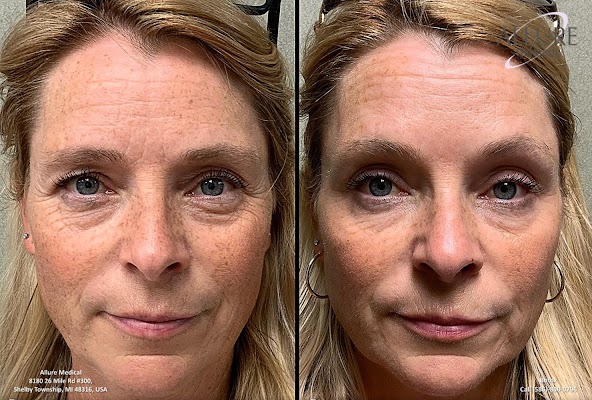
Here is a simple, patient-facing checklist to discuss with your injector:
- Which expressions do you want to keep strong, and which would you like to quiet? Where do you notice creasing at rest, not just in motion? Do you experience headaches, clenching, or facial fatigue that might guide dosing? Are you preparing for a specific event or camera setting with timing needs? How do you feel about subtle brow shaping versus keeping your native brow line?
The bottom line for a believable illusion
A shorter-looking forehead is not a trick of light alone. It is the product of balanced forces: a relaxed glabella so the frontalis does not overcompensate, a steady lateral brow that keeps the eyes open, and skin that reflects cleanly. Strategic Botox placement can accomplish all three with a light hand. The changes are measured in millimeters and micro-expressions, but they read clearly on faces and in photos.
When done with restraint and respect for your patterns, you gain controlled facial movement, softer lines, and better proportions without losing your character. That is the quiet sophistication many people seek, whether for a confidence boost, a polished appearance at work, or a high definition face that holds up under scrutiny.